
This post is the one of many capstone projects from the inaugural 2026 cohort of the Rebus Luminary Fellowship for Education Leaders. Each Luminary Fellow was invited to share a reflection with the broader community. Today, we hear from Bryce Smedley, an educator and writer working in rural teacher education in Southern Oregon.
In early 2025, entire educational worlds disappeared almost overnight.
At the time, I was working in Thailand as an education officer with the United States Agency for International Development (USAID), serving communities in Myanmar. The collapse was not something I watched from afar. It was unfolding around me in real time.
It arrived through emails. Through calls. Through messages from colleagues trying to understand whether programs would continue, whether funding would survive, and whether years of work were about to disappear. Partnerships unraveled. Educational initiatives stalled. Institutions that many people had spent decades building suddenly faced an uncertain future.
I watched colleagues lose systems they had devoted years of their lives to creating.
I had worked in Afghanistan, served in the Democratic Republic of Congo, and spent years working with educators, universities, and community organizations connected to Myanmar. These people were not distant places or professional acquaintances. They were friends, host country colleagues, institutional partners, and communities I continued to speak with and support from afar.
In Afghanistan, pathways for girls and young women narrowed again beneath a particular kind of political abandonment. In the Great Lakes region of Africa, colleagues working in literacy and inclusive education struggled to keep programs alive amid growing uncertainty. In Myanmar, the idea that education and democratic participation belonged together increasingly felt less like an aspiration and more like a fight for survival.
By September, I had returned to the United States. The struggle remained.
A lot of us lost more than work. We lost direction. Careers fractured. Communities scattered. People who had spent years building access to learning for others suddenly found themselves starting over.
I got lucky. A temporary contract opened up at a university where I had worked years before. I thought I was stepping back from the front line.
I was wrong.
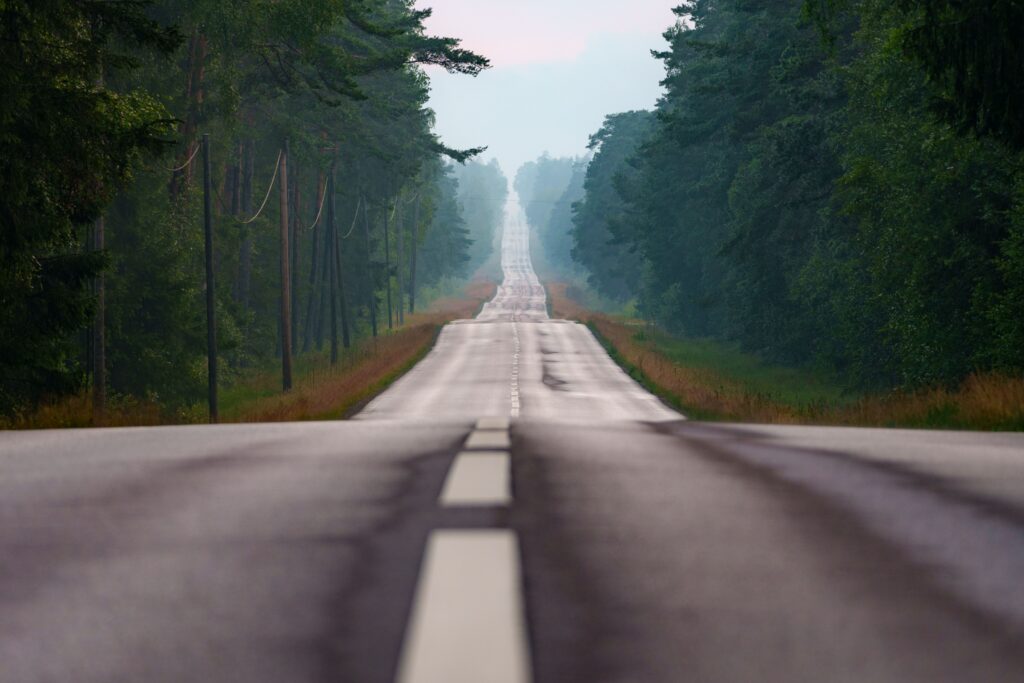
Back in rural teacher education in the United States, I ran into a different kind of precarity. Students working two jobs while carrying full course loads. Some were driving in from towns so small they do not show up on most maps. Others were trying to become the first licensed teacher their family had ever produced. Many were staying close to home because leaving was simply not something their finances allowed.
At the same time, colleges, libraries, and community institutions across the country were closing, cutting, shrinking. The crisis was local now. Intimate. Unfolding inside communities that depended on public education as one of the last things holding them together.
I was trying to find my footing, too. I had gone from working internationally to returning home, and wondering what comes next professionally. The students sitting in front of me were carrying uncertainty about housing, finances, jobs, and the future. I had spent years helping build educational opportunities for other people. Suddenly I was struggling to imagine my own future. Was international education behind me? Was higher education where I belonged? How many times can a person start over professionally before it stops feeling temporary?
What I kept noticing was not the instability of my role itself. It was the exhaustion underneath it. Faculty, librarians, students, staff, administrators, all carrying grief quietly while trying to do the ordinary work of showing up and teaching and learning. Every conversation seemed to circle the same unspoken question:
How do you keep fighting for education when you are not sure you are going to be okay yourself?
That was what I was carrying when I applied to the Rebus Luminary Fellowship. I wrote the application without much expectation. Mostly I just wanted someone to read it and recognize the moment a lot of us were living through.
What happened after surprised me.
I was accepted as an inaugural Luminary Fellow and found myself in conversation with educators, librarians, and higher education leaders who were wrestling with many of the same uncertainties about education, community, and what comes next.
I had no idea what to expect. I had been through enough professional development programs, conferences, and workshops to know that not every gathering becomes meaningful. At that point, I was carrying a great deal of uncertainty about my own future and did not arrive looking for inspiration. I arrived hoping for honest conversation.
Over months of online conversations, people from different regions, institutions, and professional backgrounds started speaking with a level of honesty that felt unusual. People talked openly about burnout, layoffs, budget cuts, political pressure, and the feeling that many of the systems they had devoted their careers to were becoming less stable. What struck me was not that our situations were identical. It was how familiar the emotions sounded. Fear. Exhaustion. Uncertainty. Responsibility.
The Fellowship created something that had become rare in higher education: a place where people could stop pretending everything was fine.
And maybe that is what fellowship actually means during periods of collapse. Not professional networking. Not institutional branding. Simply the refusal to let one another disappear under the weight of it alone.
Then we met in person in Vancouver for a two and a half day convening.
The convening opened with an Indigenous welcome from a Squamish Nation Elder. His words and drumbeat did something to the room that I am still trying to describe accurately. The pace stopped. People listened in a way that felt different from conference listening. Something settled.
For me, it felt like the room exhaled. People relaxed. They smiled. There was a feeling of being welcomed into something shared. As the Elder spoke, people seemed genuinely present. Not waiting for their turn to talk. Not checking phones. Just listening.
It felt like the beginning of a community rather than the beginning of a conference. We had been brought together from different institutions, backgrounds, and parts of the world, but for a moment none of that seemed to matter. There was time to get to know one another. Time to learn. Time to listen. Time to recognize that we were sharing something meaningful together.
The organizers seemed to understand that trust does not appear on a schedule. Before asking people to collaborate, challenge one another, or discuss difficult questions, they created space for people to arrive as whole human beings rather than as job titles, institutions, or professional identities. It felt very different from many online professional gatherings, where introductions are brief and the agenda begins almost immediately. Here, relationship building was not treated as separate from the work. It was the work.
The Fellowship created something that had become rare in higher education: a place where people could stop pretending everything was fine… that is what fellowship actually means during periods of collapse… the refusal to let one another disappear under the weight of it alone.
Over the next two and a half days, that feeling continued to grow. Trust developed slowly through conversations, shared meals, walks along the waterfront, and opportunities to reflect together. People spoke honestly about challenges they were facing in their work and in their lives. There was room for vulnerability and questions that rarely fit into professional settings.
We talked about burnout, trust, conflict, responsibility, and what it means to keep serving communities when your own footing feels uncertain. We listened to one another more carefully than most professional settings allow.
What stayed with me was not any particular framework or exercise. It was the gradual sense of trust that developed over those days. The realization that many of us were carrying similar doubts and burdens even though our institutions, roles, and personal histories were very different. For a brief period, people did not have to pretend they had everything figured out.
What came out of those days was not optimism, at least not for me. I did not leave believing a fellowship could reverse educational inequity, stabilize struggling institutions, or halt the erosion of democratic participation. The problems waiting for all of us were still there when the convening ended.
What changed was my understanding of resilience.
Higher education often teaches educators to survive alone. Work harder. Produce more. Absorb more. Endure more. Keep your head down and outlast whatever comes next.
The Luminary Fellowship pointed me in a different direction.
What I carried home was a stronger appreciation for how much educational work depends on relationships. Students rely on teachers. Teachers rely on colleagues. Institutions rely on communities. When those connections weaken, everything becomes harder to sustain.
I also began to see connections between what I had witnessed in international education and what I was now witnessing in rural American higher education. The settings were different, but many of the underlying questions were the same. Who gets access to learning? Who gets left behind when institutions weaken? Who carries the consequences when public commitments begin to erode?
The Fellowship did not make any of those pressures disappear. Most of us may have returned to campuses, libraries, classrooms, and communities facing financial strain, political conflict, and deep exhaustion. But for me, something shifted.
The isolation I had been carrying broke.
I arrived in Vancouver wondering where I belonged after losing one career and watching another become increasingly uncertain. I left with a different answer than I expected. Not certainty. Not a plan. Just the realization that I was no longer carrying those questions alone.
I left Vancouver with relationships that extended beyond the fellowship itself. People I could call. People whose work I would continue to follow. People who understood the questions I was wrestling with because they were wrestling with many of the same ones.
That mattered more than I expected.
Looking back, what stays with me is the reminder that education has always depended on people willing to gather, share knowledge, and invest in one another across differences of geography, institution, and circumstance. Access to learning remains one of the few forces in human history that has consistently expanded opportunity, participation, and freedom.
The fellowship did not remove the weight that comes with being an educator.
It made it possible to carry it together.
About the Author
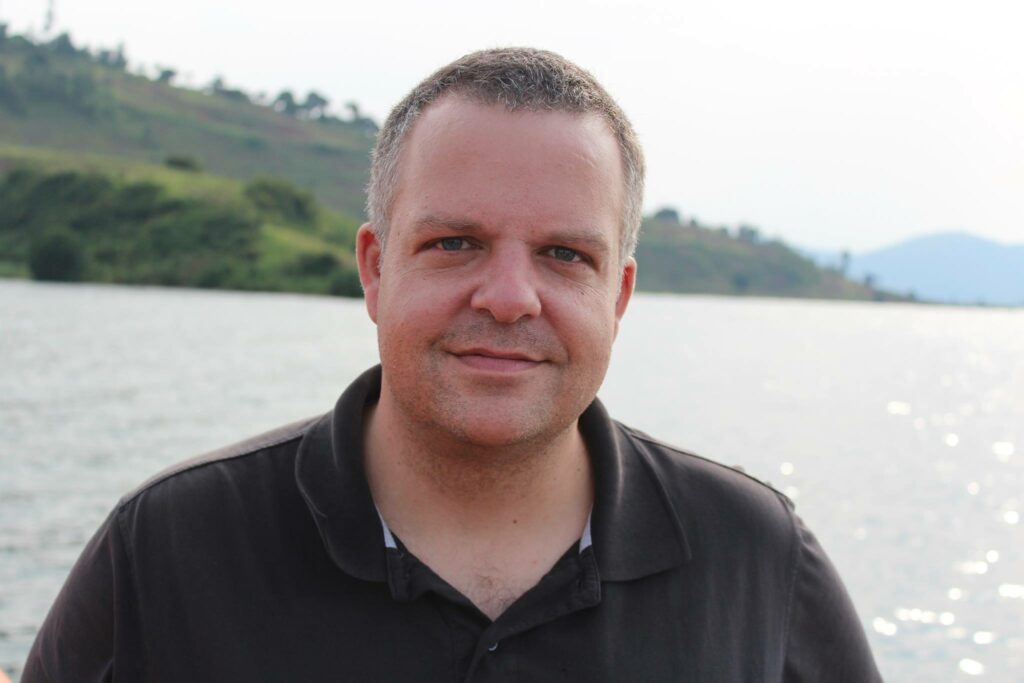
Bryce Smedley is an educator and writer working in rural teacher education in Southern Oregon. His work focuses on public education, democratic participation, and the human realities underneath institutional crisis and educational inequity.
Author’s Note
References
The Rebus Foundation. (2025). Luminary Fellowship. https://rebus.foundation
U.S. Agency for International Development. (2025). Agency transition and closure materials. https://www.usaid.gov
Accessibility Note
Spelling, grammar, and proofreading tools were used during revision. All ideas, experiences, interpretations, and conclusions are the author’s own.